
Produce in focus: Chestnuts
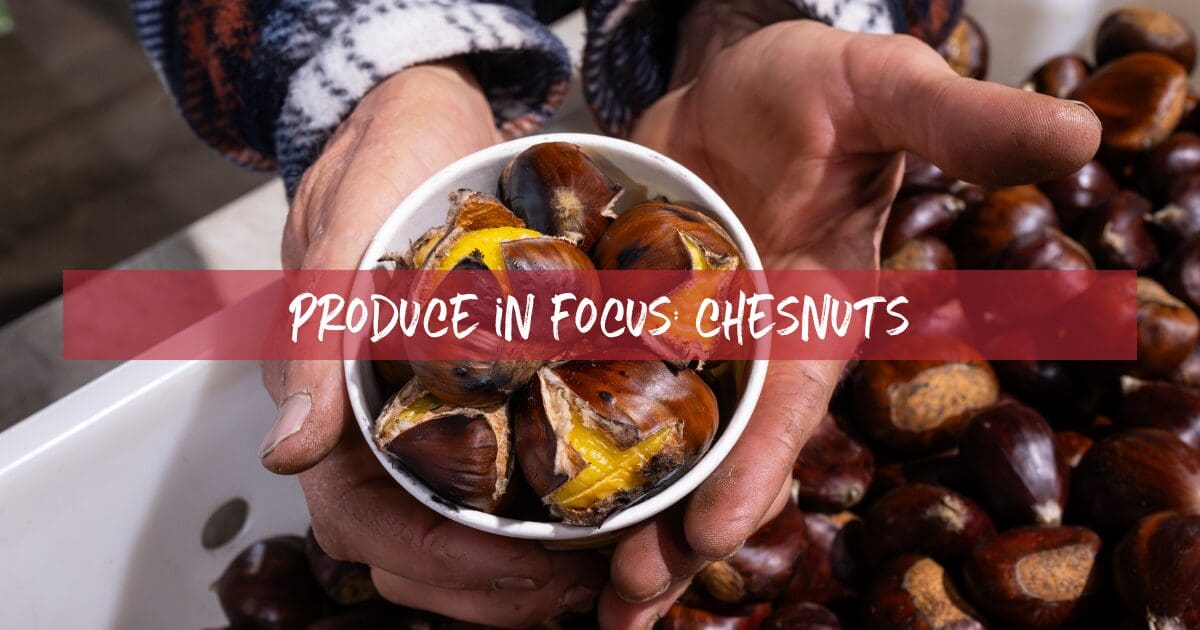
There’s a moment every autumn at the Capital Region Farmers Market that lets you know the season has truly turned. It’s not the cooler mornings, or the scarves coming out of storage. It’s the smell of chestnuts roasting on the BBQ drifting across the shed on a Saturday morning, warm and familiar, and deeply, unmistakably good.
If you’ve been walking past the chestnut stall without stopping, this is your sign to slow down.
What makes chestnuts special
Chestnuts are one of the more misunderstood items at the Market. Many shoppers admire them but aren’t quite sure what to do with them, which is a shame because they’re one of autumn’s most rewarding ingredients.
Unlike most nuts, chestnuts are low in fat and relatively high in complex carbohydrates, giving them a starchy, slightly sweet flavour that sits closer to a roasted potato than a walnut. They’re also naturally gluten free, which makes them a useful option for those cooking around dietary requirements.
Chestnuts have been grown in Australia for over a hundred years, though a commercial industry has only been established since the 1970s. [chestnutsaustraliainc] The majority of Australian production comes from north-east Victoria, but chestnuts are also grown in NSW and the ACT region, including around Orange and Tumbarumba. What you pick up at the Market has been grown relatively close to home, by small family operations who know their orchards inside out.
The most common variety grown in Australia is the European chestnut, though Chinese, Japanese and American varieties are also grown, along with a number of hybrids. Different varieties offer slightly different flavour profiles and textures, and part of the fun of buying direct from a grower is being able to ask what they’d recommend for what you’re planning to cook.
How to enjoy them
The simplest starting point is roasting. Score a cross into the flat side of each chestnut with a sharp knife, then roast them on a hot BBQ or in the oven until the shells split back and the flesh inside turns soft and golden. Peel them while they’re still warm and eat immediately.
From there, chestnuts open up into a surprisingly versatile ingredient. They work beautifully in soups, stuffings, pasta dishes, risottos and baked goods. For recipe ideas and more background on the industry, the Chestnuts Australia website at chestnutsaustraliainc.com.au is a great place to start.
Meet Featherdale Chestnuts at the Market
The stall to find on a cold Saturday morning is Featherdale Chestnuts, run by Guy, whose family has been growing chestnuts for forty years. He was just six years old when he helped his parents, Terry and Christine, plant the first trees on the property. Those same trees are still producing today.
It’s a story of remarkable continuity, and one that took a devastating turn in 2020 when fires swept through the property, taking parts of the orchard, the family home, his mum’s gardens and much of the farm’s infrastructure. The family rebuilt, and today, 400 new chestnut trees are growing alongside the originals, each one a small act of determination.
For Guy, selling at the Market isn’t a side project or casual weekend job “Selling to the shoppers of Capital Region Farmers Market is our main source of income,” he told us. “We wouldn’t be able to continue producing if we didn’t have this outlet. Selling through wholesale or major supermarkets is just not worth the farming.”
At the Featherdale stall, you can pick up whole chestnuts in a number of varieties to take home and cook yourself. Or, on a cold Market morning, you can simply grab a warm bag straight off the BBQ and carry them around as you shop. Hands warm, belly happy. There are few better ways to spend an autumn morning in Canberra.