
Food for the soul: growing pesticide-free cut flowers with Fiokhea Flowers
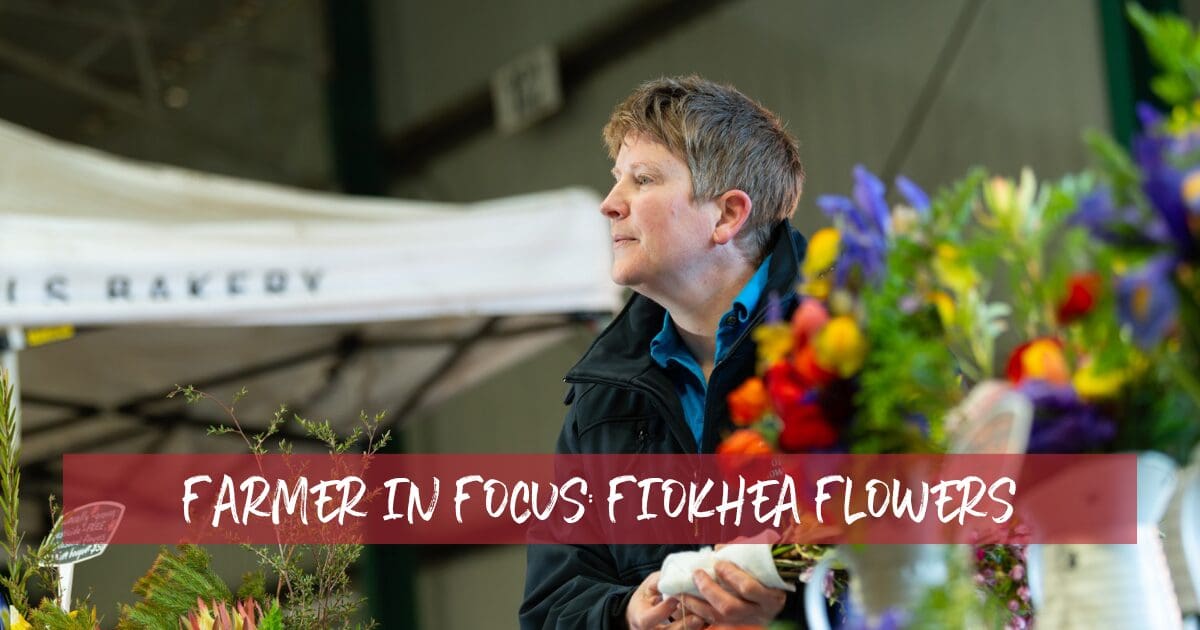
If you’ve picked up a bunch of seasonal blooms at the Market lately, there’s a chance they came from Fiokhea Flowers, a regenerative micro flower farm run by Fiona Jeffery in Lower Boro, near Tarago. Fiona swapped an office career for a life among the casuarinas and glossy black cockatoos, and hasn’t looked back since. We asked her about the move, the flowers and why growing natives is where her heart is.
Tell us a bit about yourself…
Fiokhea Flowers is a regenerative micro flower farm in Lower Boro, near Tarago, New South Wales. We’re only about 40km northeast of the Capital Region Farmers Market at EPIC, though it’s an hour’s drive by road. We grow seasonal, pesticide-free cut flowers for Canberrans.
How did you get started with Fiokhea Flowers? What drew you to being a flower grower?
I got sick and had to leave my office career, so we moved rurally to help my health. I thought about many different ways I might be able to make a living farming, and flowers seemed to offer a solution that would work. Growing plants has always brought me joy, so that felt like a nice fit too.
What do you love about what you do?
I love so many things. I love being outside in nature, harvesting while the glossy black cockatoos fly overhead is so special. Getting to wear comfy clothes each day, and no heels, is also one of my all-time favourite things. And being my own boss is great. It’s all on me, but I also get to make the decisions I feel are right.
I also love the beauty of flowers. Looking at flowers makes me happier than I could ever have imagined. They really are food for the soul.
What do you find challenging?
I work by myself most of the time, and sometimes it would be lovely to have a colleague to help motivate me through the tough stuff. It’s also really challenging learning all the hundreds of things a small business owner needs to know, without even getting to the farming.
On the farming side, I’m not a fan of the eight-legged creepy crawlies, and I don’t enjoy being outside in really hot weather. But the biggest challenge is always trying to keep plants alive and thriving.
What are some misconceptions people might have about being a flower farmer?
Many people probably aren’t aware of the crop planning that goes into flower farming. We have to plan our crops at least six to twelve months ahead of time, and even earlier for many plants.
We want to eventually specialise in natives and proteaceae, but for many of these plants we won’t have a significant harvest for the first five years. It’s tricky juggling the planning to provide a consistent supply of flowers each week while we’re still getting the farm established.
What do you love about attending the Market?
The people. Market people are the best humans, and Market customers and stallholders are amazing. I have made so many friends, and I truly love talking to our customers and getting to know our regulars.
What are your plans for the future of Fiokhea Flowers?
We plan to transition our crop to predominantly native Australian flowers and proteaceae. We want our significant crops to work with our land, be drought tolerant, and support our native wildlife and biodiversity.
We’ll probably always grow some annuals and non-natives, because I particularly love the bright summer colours, but our goal is to make natives and proteaceae our focus.
Find Fiokhea Flowers at the Market
From casuarinas that shelter glossy black cockatoos to bouquets grown without a trace of pesticide, Fiokhea Flowers brings a little piece of the Lower Boro bush to the Market each week. Stop by Fiona’s stall on your next visit, pick up a bunch grown with the land in mind, and see for yourself why she calls flowers food for the soul.